A Week Inside Mini Makers
I wanted to take a moment to share a little glimpse into Mini Makers because what happens inside these classes is really special.
At Kith + Kin, that support is real. Not just for me, but for everyone who walks through the door. The space is beautiful, but it’s really the people and the energy that make it what it is. I only captured a few photos but they hold small pieces of something much bigger. And Instagram doesn’t always give the ability to show that and this felt too important not to share the rest. This past week alone, I welcomed over 25 little makers into the space. And each class held its own kind of magic.
I teach Mini Makers as a weekly class for children ages 18 months to 5 years. It’s rooted in hands-on, open-ended, sensory art and play. Every week has a different theme, but the heart of it is always the same: accessible creativity, freedom to explore, and space to just be.
There’s a lot that goes on behind the scenes. I spend much time throughout the week planning, gathering materials, packing up my car, setting everything up, and then breaking it all down again. It’s a labor of love and this week especially, with my child home on spring break, I felt so deeply supported being able to bring them along with me.
As someone who spent over 20 years in corporate fashion, I don’t take this kind of environment for granted. To feel supported, appreciated, and given the freedom to create is something truly rare. And it’s something that I see reflected not only in my own experience, but in everyone who walks into the space.
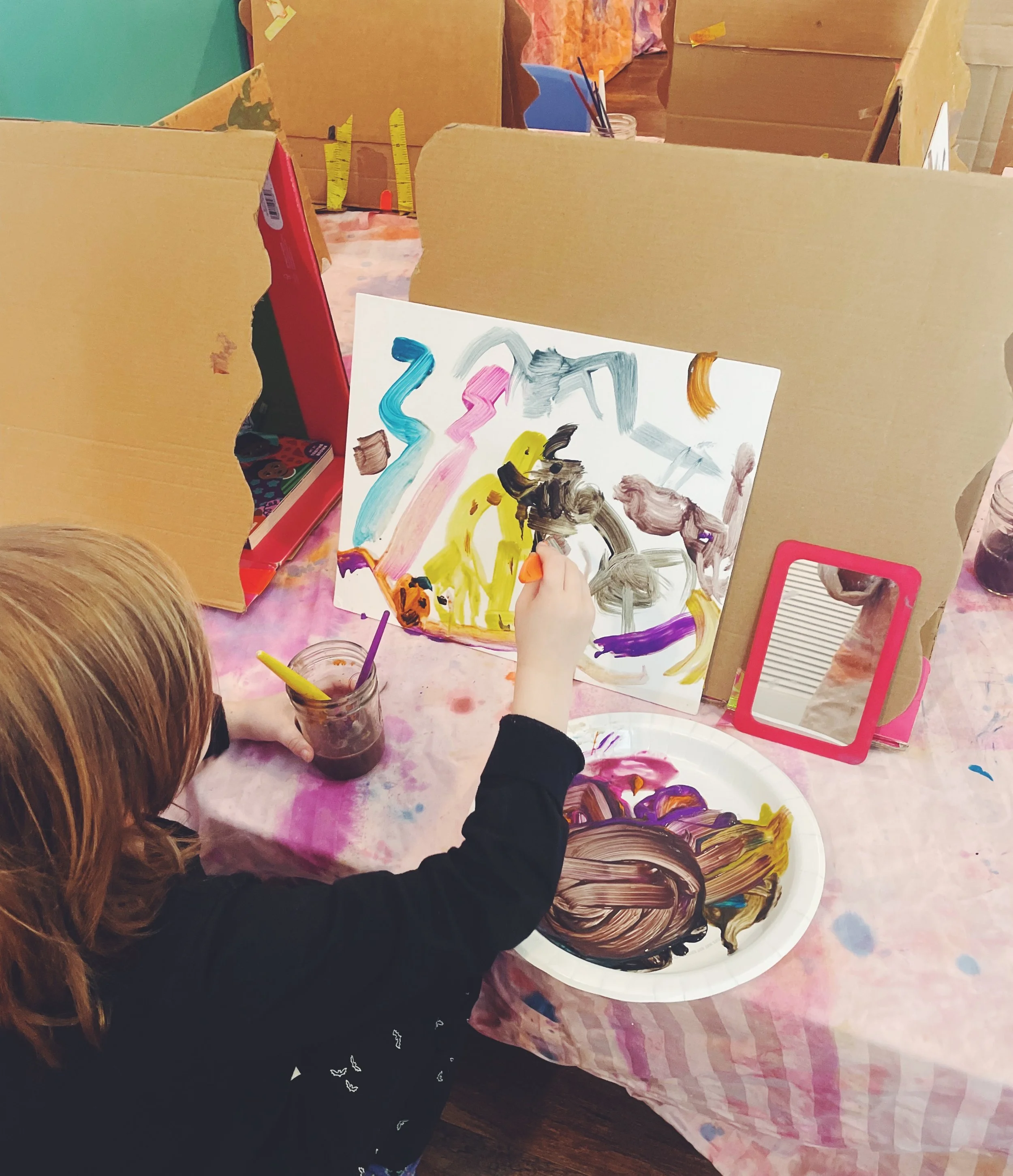
This week’s class was inspired by Frida Kahlo. I shared a bit of her incredible story, how she began painting while recovering from an accident, using a mirror above her bed to create self portraits. We talked about what it means to create a self portrait, and how it can include not just your face, but the things you love.
Even the youngest children sat and listened. I watched them explore the texture of the canvas, the feeling of the paint, and begin to translate their ideas into something visual. It’s incredible to see that sense of curiosity and willingness to try, even at such a young age.
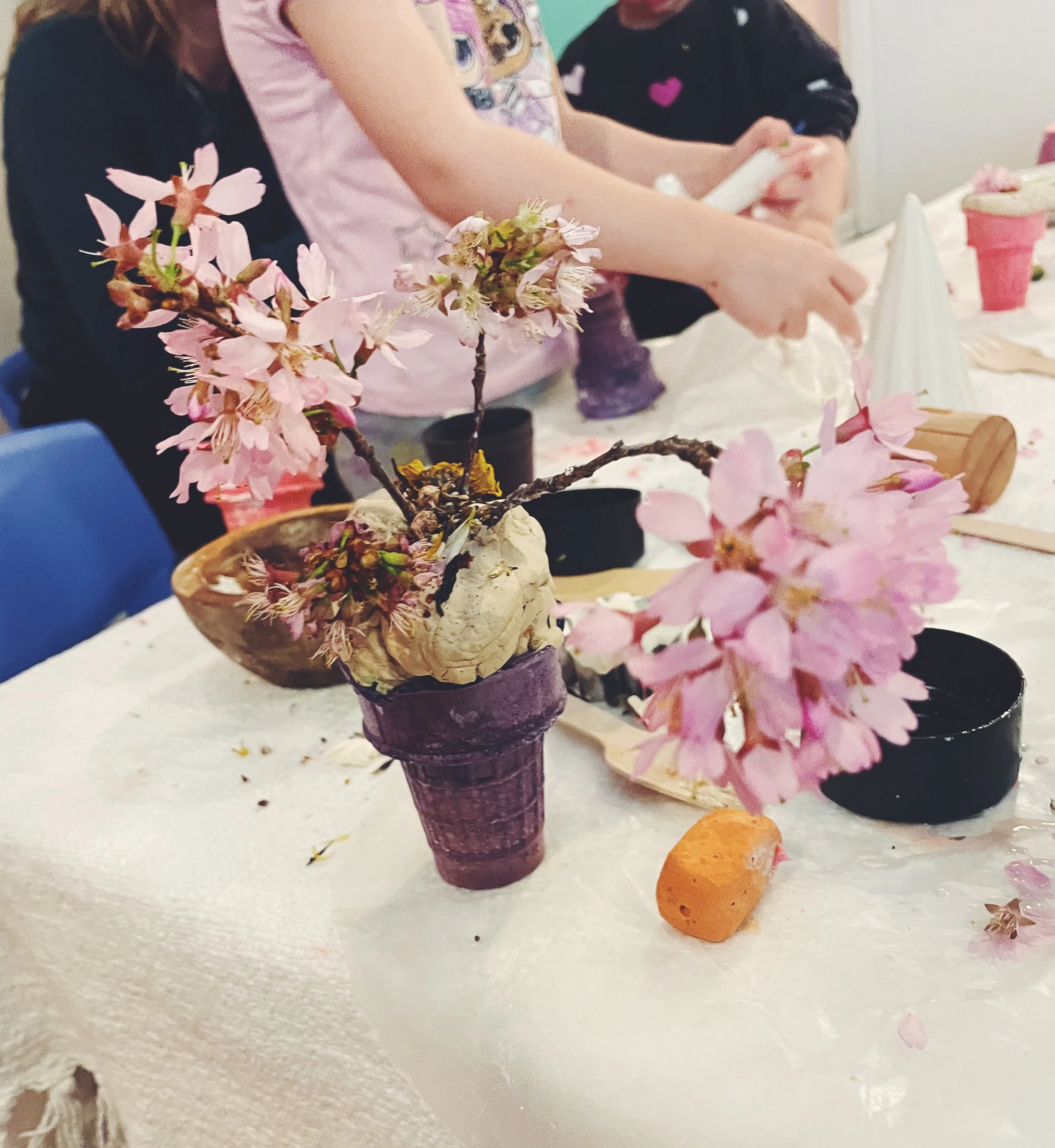
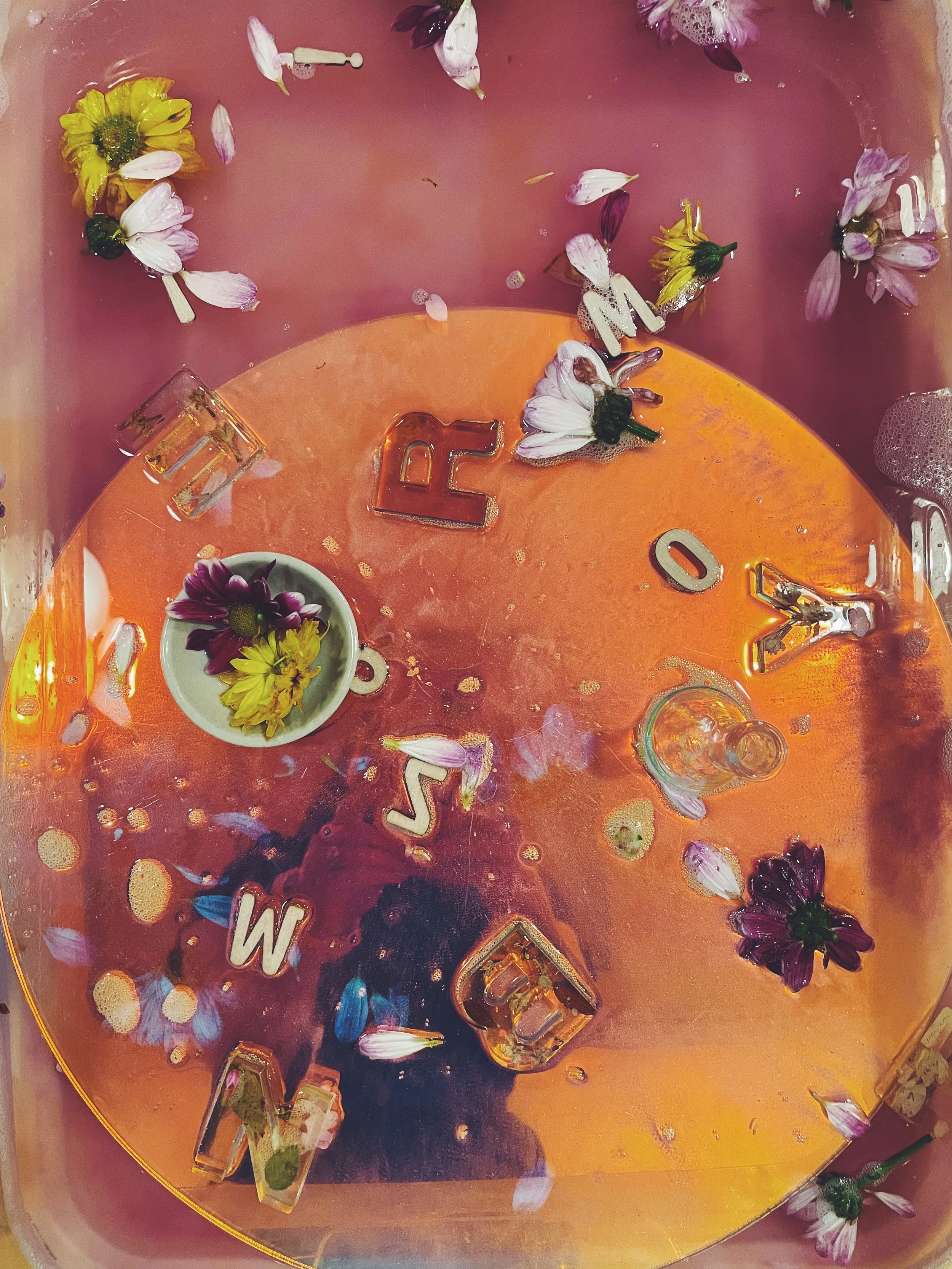
Around the room, I set up a few different stations: painting, a water sensory station, and a building area with salt dough, flowers, and even clementines. The simplicity of the materials really allows the children to lead—and they always come up with more than I could have imagined.
There’s something really powerful about giving kids the freedom to move between experiences, to make a mess, to try things without pressure. And in that freedom, you see so much creativity, collaboration, and pride in what they create.
One of my favorite moments was watching a group gathered around the water station, children and caregivers playing and experimenting together. Someone mentioned it felt like Sister Cities Park, my heart glowed, it felt like such a beautiful compliment.
At the end of class, people stayed. They talked, connected, shared stories. I saw small acts of kindness, children handing each other flowers, collaborating, caregivers supporting one another. It’s more than an art class, it’s a moment to pause, to breathe, to feel a little less alone.